Abstract
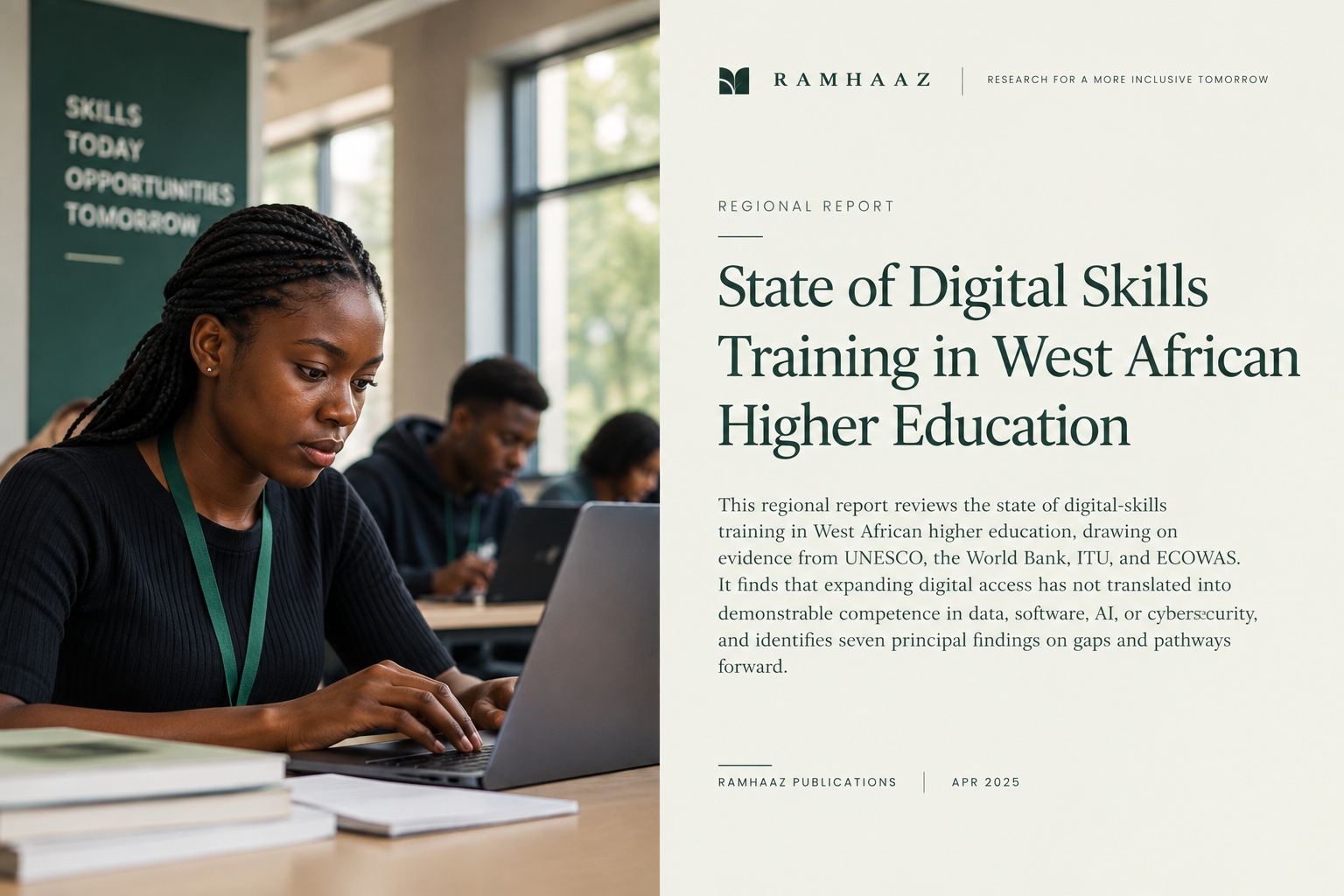
This regional report assesses how prepared West African higher-education institutions are to build a digitally competitive graduate workforce, drawing on evidence from UNESCO, the World Bank, the ITU, ECOWAS, and country-level initiatives across Nigeria, Ghana, Senegal, and Côte d'Ivoire. It finds that while institutions are expanding learning-management systems, innovation hubs, and industry-linked certifications, digital access has not translated into demonstrable competence in data analysis, programming, cybersecurity, cloud technologies, or responsible AI use — a gap compounded by the fact that only 38% of Africa's population had internet access in 2024, against a global average of 68%. The report reaches seven core findings: digital-skills provision is fragmented across degree programmes, boot camps, and certifications; basic digital literacy is no longer sufficient for employability; infrastructure and affordability still determine who can participate; faculty readiness is a major bottleneck to curriculum modernisation; curriculum renewal lags behind technological change; labour-market alignment is improving only in pockets; and the region lacks comparable, institution-level data on digital competencies needed for policy and accountability. It proposes a shift from measuring "digital exposure" to verifying actual digital capability, recommending a baseline competence standard for all graduates alongside discipline-specific advanced pathways, built through combined curriculum reform, faculty development, and stronger employer partnerships.
Download Full Publication
Access the complete document