Abstract
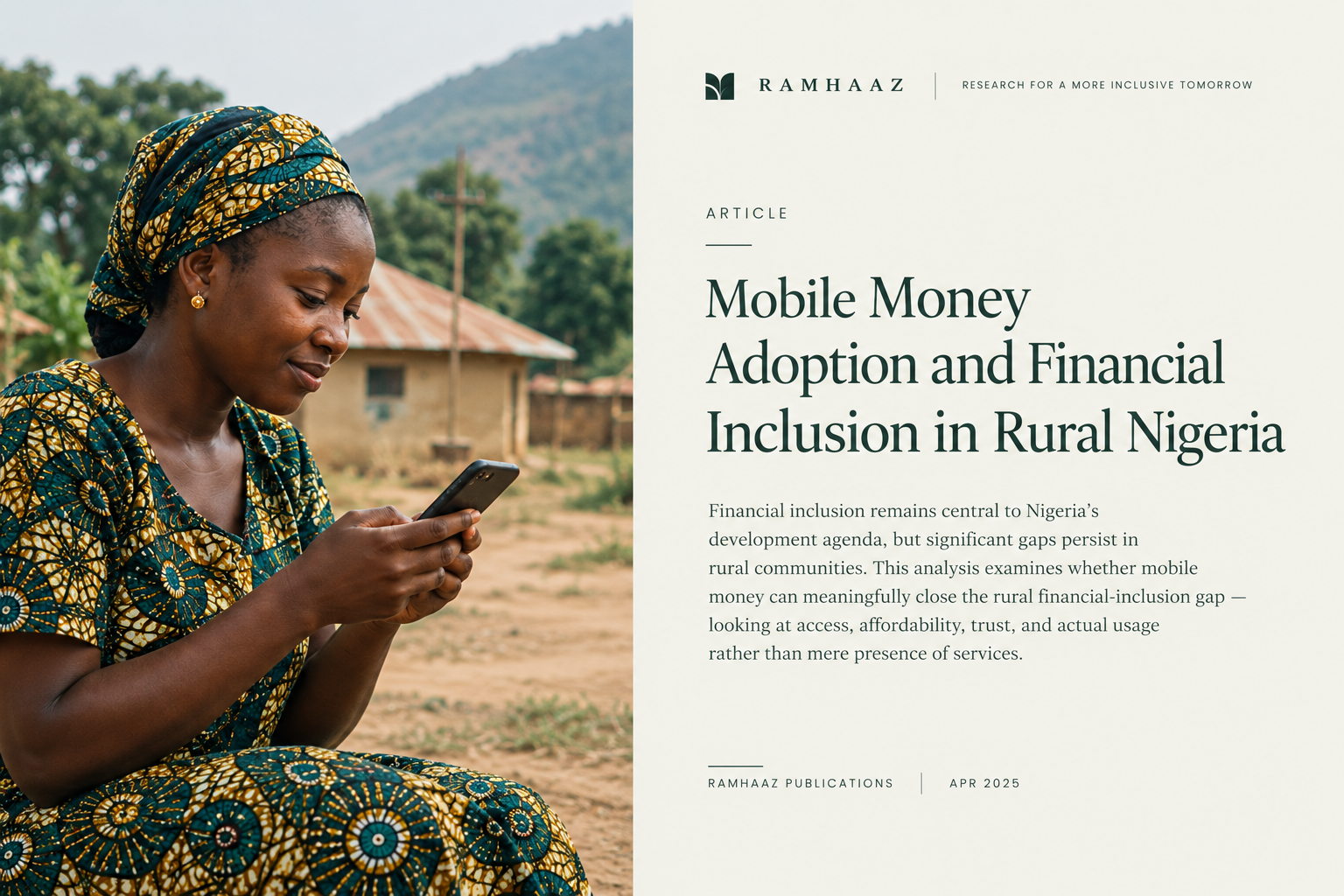
Financial inclusion has advanced significantly in Nigeria over the past decade, with formal inclusion rising from 56% in 2020 to 64% in 2023, yet rural communities, smallholder farmers, informal businesses, and women remain disproportionately excluded, with exclusion rates still exceeding 38% in parts of the North-East and North-West. This report examines mobile money as a channel for closing that gap, arguing that the real question is not whether mobile money services exist in a community, but whether rural households can reliably access, afford, understand, trust, and consistently use them. Drawing on CBN, EFInA, and World Bank Global Findex data, the analysis reviews Nigeria's regulatory push behind agent-based mobile finance — including the CBN's Shared Agent Network Expansion Facility (SANEF) — and identifies five ways mobile money can support rural inclusion: reducing distance barriers, easing remittances, supporting small and informal businesses, enabling digital savings, and serving as a gateway to broader financial services. It also outlines persistent barriers, including weak network and electricity infrastructure, limited digital and financial literacy, low consumer trust, agent liquidity shortfalls, and transaction costs that remain significant for low-income users. The report concludes that a primary rural household survey is needed to fully assess the adoption gap, an area RRPA identifies as a priority for future field research.
Download Full Publication
Access the complete document